
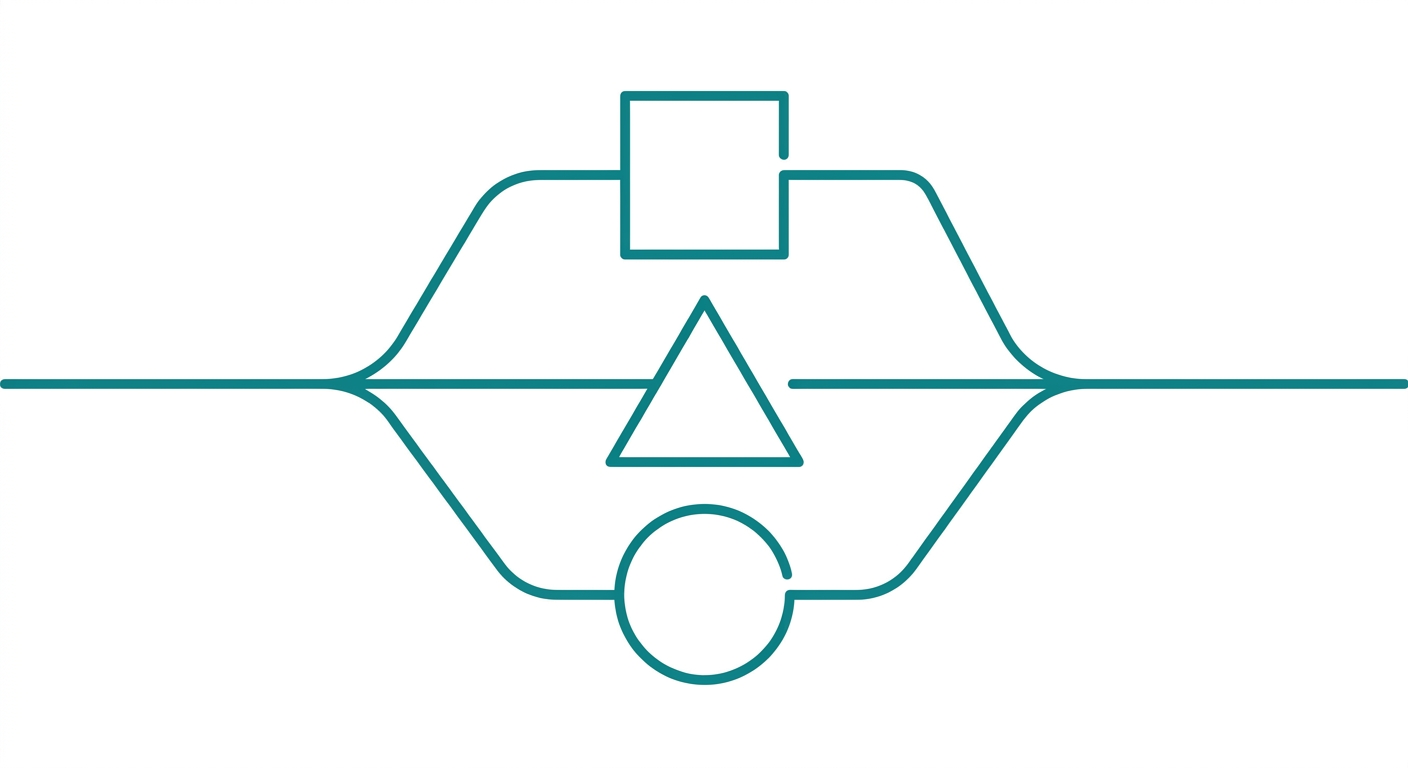
A framework is supposed to make decisions easier. That is one reason learning designers use them. Frameworks help organise complexity, draw attention to important considerations, and provide shared language for discussing educational problems.
An accessibility problem may look different when viewed through Universal Design for Learning than when viewed through programme governance. A curriculum challenge may produce different priorities depending on whether the focus is learner autonomy, assessment validity, programme coherence, or institutional requirements. A programme redesign could be approached through Constructive Alignment, UDL, Human-Centred Design, or a learning theory-informed process.
None of these approaches may be inherently unreasonable. The difficulty is that they may point practitioners towards different priorities, different risks, and different definitions of quality. At that point, the decision is about which source of judgement should carry the most weight because there are several defensible responses.
Option One: Follow a Dominant Framework
One response is to adopt a single framework and use it consistently throughout the project.
The attraction is obvious. A dominant framework creates coherence. Design decisions can be linked back to a shared set of principles and assumptions. Stakeholders have a common language for discussing priorities and evaluating proposals. Decisions become easier to explain because they follow a recognised structure.
This approach is particularly attractive in large projects where consistency, transparency, and coordination matter. A single framework reduces ambiguity about how decisions should be made and what counts as an acceptable response.
The risk is that every framework illuminates some aspects of a problem more clearly than others. The stronger the commitment to a single framework becomes, the easier it is for the boundaries of the framework to become the boundaries of the problem. The educational challenge may gradually become a framework challenge instead.
Option Two: Combine Frameworks
A second response is to deliberately draw on several frameworks at the same time.
The intention is usually sensible, and many experienced practitioners work this way. If one framework reveals part of the picture, perhaps combining several will provide a more complete account.
The appeal of this approach is flexibility because instead of accepting the limitations of a single framework, the designer gains access to several complementary perspectives. Blind spots in one framework may be compensated for by strengths in another.
The trouble is that frameworks do not always make compatible assumptions. One framework may prioritise consistency while another emphasises flexibility, one may encourage standardisation while another values adaptation, one may define success through outcomes, while another focuses on learner experience.
Combining frameworks can create the appearance of comprehensiveness while masking unresolved tensions between them. A practitioner may end up holding several sets of assumptions simultaneously without a clear basis for deciding which should prevail when they conflict. The problem shifts from ‘Which framework should be followed?’ to ‘Which framework should be followed when the frameworks disagree?’.
Option Three: Start With the Context
A third response is to reverse the process and begin with the situation rather than the framework. This approach treats frameworks as tools rather than authorities.
The nature of the problem, available evidence, learner needs, institutional conditions, accessibility considerations, and educational purposes are examined first. Frameworks are then used selectively to illuminate aspects of that situation.
Individual models retain value, but no framework is assumed to be the starting point. Different frameworks may be useful at different moments because they help reveal particular aspects of the problem rather than because they provide a complete answer.
The attraction is that context remains primary. Frameworks are selected because they help explain something that matters rather than because they happen to be familiar, institutionally preferred, or professionally fashionable.
The gamble is that without a dominant framework, practitioners need to justify why particular models have been adopted, what assumptions they bring, and which tensions remain unresolved. Context-first approaches can become difficult to explain, standardise, evaluate, or scale because much of the reasoning remains dependent on practitioner expertise. Two experienced learning designers may interpret the same problem differently and arrive at different, yet still defensible, conclusions. That this approach requires judgement that cannot be fully delegated to the framework itself is both its strength and its vulnerability.
Which Response Is Best?
The difficulty with this problem is that each approach responds to a genuine weakness in the others. A dominant framework creates coherence where multiple perspectives may create confusion. Combining frameworks broadens perspective where a single model risks narrowing attention. Beginning with context resists allowing any framework to dictate the boundaries of the problem.
Each approach is legitimate, but deciding what should happen when legitimate influences point in different directions is an ongoing challenge. For that reason, the most defensible response is often the third because frameworks become more useful when they are selected for a specific purpose rather than treated as universal solutions.
Frameworks organise attention, reveal possibilities, expose assumptions, and create shared language. A framework may help explain the problem. What it does not do is remove the need for professional judgement.
It cannot decide which educational purpose should take priority, which learner costs are acceptable, what evidence is sufficient, or which compromise remains most defensible under current conditions. Those decisions remain the responsibility of the practitioner. And that responsibility begins the moment the frameworks start disagreeing.
Those decisions remain the responsibility of the practitioner. And that responsibility begins the moment the frameworks start disagreeing.
The accompanying Framework Selection Record is designed to help practitioners compare plausible approaches, surface assumptions, and document the judgement behind framework choices.


Leave a Reply